
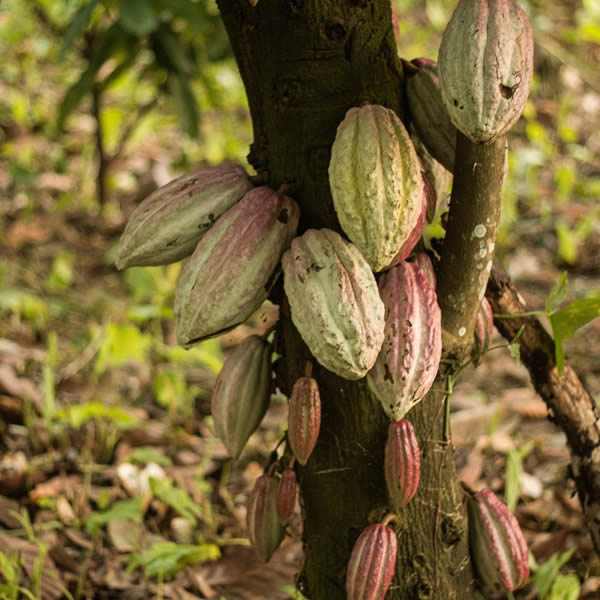
(Theobroma cacao)
The cacao tree, scientifically known as Theobroma cacao, is a tropical plant native to Central and South America, whose fruit is the basis for chocolate. Its name comes from the Greek and means “food of the gods,” a reference to its ancestral and cultural value among pre-Columbian civilizations such as the Mayans and Aztecs.
This tree grows naturally in warm and humid climates, typically in regions near the equator. It grows between 4 and 8 meters tall and thrives under the shade of taller trees, forming part of the tropical rainforest ecosystem.
The cacao tree produces fruits called pods or cobs, which grow directly on the trunk and main branches. Each pod contains between 20 and 50 seeds, commonly known as cacao beans, surrounded by a sweet pulp. These beans, once fermented and dried, are used to produce cacao paste, butter, and powder, essential ingredients in chocolate making.
In addition to its economic and culinary importance, Theobroma cacao has significant ecological value. Its sustainable cultivation contributes to biodiversity conservation and the livelihoods of millions of small farmers in tropical countries.


